Quick Summary: The best mulch for flower beds is Double-Shredded Hardwood for general soil improvement or Cedar Mulch for long-lasting pest resistance. If you require zero maintenance, Inorganic Mulch (like river rock) is the choice, though it offers no nutritional value to your plants.
Introduction: The Role of Mulch in a Professional Landscape
In modern horticulture, mulching is no longer just “dressing” a garden. It is a critical layer of thermoregulation and moisture management. Choosing the best mulch for flower beds requires understanding the biological needs of your plants and the specific climate of your region.
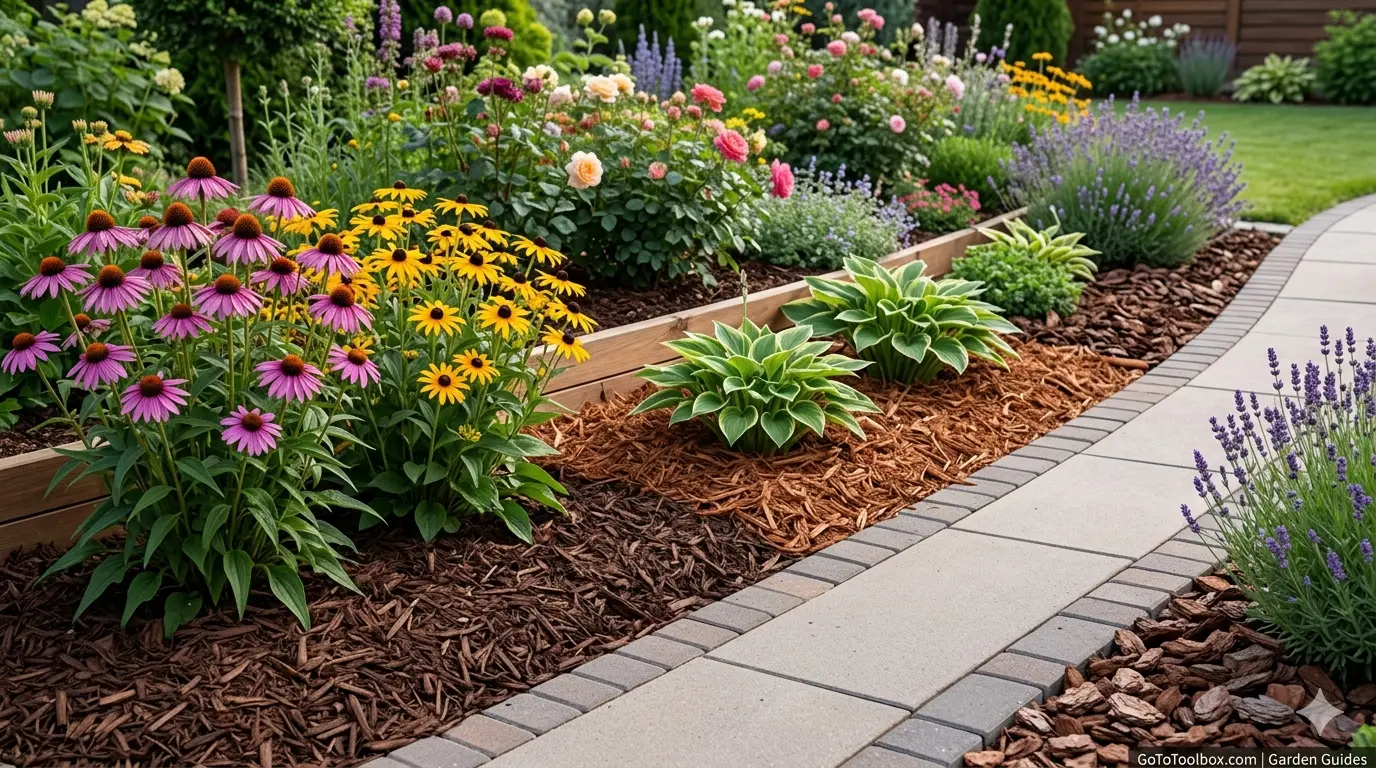
1. Organic vs. Inorganic Mulch: The Primary Distinction
Before choosing a color or texture, you must decide between a living (organic) or non-living (inorganic) barrier.
Organic Mulch (The Soil Builder)
Organic mulches are derived from once-living materials. They are the gold standard for flower beds because they mimic the natural forest floor.
Benefits: Improves soil structure, feeds beneficial microbes, and regulates temperature.
Best For: Perennials, annuals, and shrubs that require nutrient-rich soil.
Common Types: Hardwood, Cedar, Pine Bark, and Straw.
Inorganic Mulch (The Permanent Solution)
Inorganic mulches are man-made or mineral-based.
Benefits: Does not decompose, does not blow away, and provides a modern, clean aesthetic.
Best For: Succulents, xeriscaping, or areas where you want to avoid annual re-mulching.
Common Types: River rock, Lava rock, and Recycled rubber.
2. Top 7 Best Mulch Types for Flower Beds Reviewed
A. Double-Shredded Hardwood (The All-Rounder)
This is widely considered the best mulch for flower beds because its interlocking fibers prevent “washout” during heavy rain.
Pros: Cost-effective, stays in place, and adds organic matter.
Cons: Needs to be refreshed every 12–18 months.
B. Shredded Cedar (The Pest Repellent)
Cedar contains natural oils that repel termites and ants.
Pros: Naturally rot-resistant and smells incredible.
Cons: Slightly more expensive than standard hardwood.
C. Pine Bark Nuggets (The Moisture Trap)
Great for flat beds, these nuggets act like tiny umbrellas, keeping the soil beneath them cool and damp.
Pros: Very slow to decompose.
Cons: Can float away in flood-prone areas.
D. Pine Straw (The Acid-Lover’s Choice)
If you grow Azaleas or Blueberries, pine needles are the best mulch for flower beds due to their slight acidity.
E. Black Dyed Mulch (The Designer Choice)
Carbon-based dyes provide a high-contrast background that makes colorful flowers pop.
Pro Tip: In 2026, ensure your dyed mulch is certified “Pet & Plant Safe.”
F. River Rock (The Maintenance-Free Choice)
Inorganic stones provide a luxury, high-end feel.
Warning: Stones can absorb heat, potentially stressing heat-sensitive flowers in peak summer.
G. Compost / Leaf Mold (The “Free” Mulch)
Technically a mulch and a fertilizer, this is the best choice for “No-Till” gardening enthusiasts.
3. Scientific Benefits: Why Mulch Matters
To provide a truly “problem-solving” guide, we must look at the science of the best mulch for flower beds:
Weed Suppression: A 3-inch layer of mulch blocks 90% of sunlight from reaching weed seeds.
Water Conservation: Mulch reduces soil evaporation by up to 35%, significantly lowering your water bill.
Soil Insulation: It keeps roots cooler in the summer and warmer in the winter, preventing “frost heave.”
4. Calculating the Perfect Amount
One of the most common landscaping mistakes is over-mulching (the “Mulch Volcano”) or under-mulching. Both can be fatal to plants.
The Golden Rule: Aim for a consistent 3-inch depth.
The Solution: Use our specialized Mulch Calculator to convert your garden’s square footage into exact bags or cubic yards.
5. FAQ: Expert Answers to Common Questions
Q: What is the best mulch for flower beds to stop weeds? A: Double-shredded hardwood. Its dense, interlocking texture creates the most effective physical barrier against weed germination.
Q: Is cedar mulch better than hardwood? A: Cedar is better for pest resistance and longevity, while hardwood is better for rapid soil enrichment.
Q: Can I put new mulch over old mulch? A: Yes, provided the old mulch isn’t “matted” or moldy. Rake the old mulch first to loosen it before adding a fresh 1-inch layer.
Summary Table: The Quick Selection Guide
| Plant Type | Best Mulch Choice | Why? |
| Traditional Flowers | Double-Shredded Hardwood | Superior nutrient return |
| Acid-Loving Plants | Pine Straw / Needles | Maintains lower soil pH |
| Modern Landscapes | Black Dyed / River Rock | High-impact aesthetic |
| Foundation Beds | Shredded Cedar | Repels wood-destroying insects |