Introduction: The Foundation of Every Great Garden
When you build a garden, the most expensive and important decision you will make isn’t which seeds to buy or which wood to use for your frames—it’s the soil mix for raised beds you choose to put inside them. Unlike traditional in-ground gardening, a raised bed is an isolated ecosystem. It cannot “borrow” nutrients from the surrounding earth easily. Therefore, the composition of your soil determines whether your plants thrive or simply survive.
Many beginners make the mistake of filling their beds with “cheap dirt” from the backyard, only to find their plants struggling with drainage issues and nutrient deficiencies. In this deep dive, we will explore the science, the recipes, and the financial strategies behind creating the perfect soil mix for raised beds.
Why You Can’t Just Use “Dirt”
The term “dirt” is a dirty word in horticulture. What you find in the ground is often high in clay or sand and contains thousands of dormant weed seeds.
The Drainage Dilemma
In a raised container, gravity pulls water down, but the bottom of the bed creates a “perched water table.” If your soil mix for raised beds is too heavy (like native clay), the water will sit at the bottom, rotting your roots.
The Oxygen Factor
Roots need to breathe. A professional soil mix for raised beds includes “macropores”—tiny air pockets created by organic matter and minerals like perlite. Without these, your soil will compact into a brick, suffocating your vegetables.
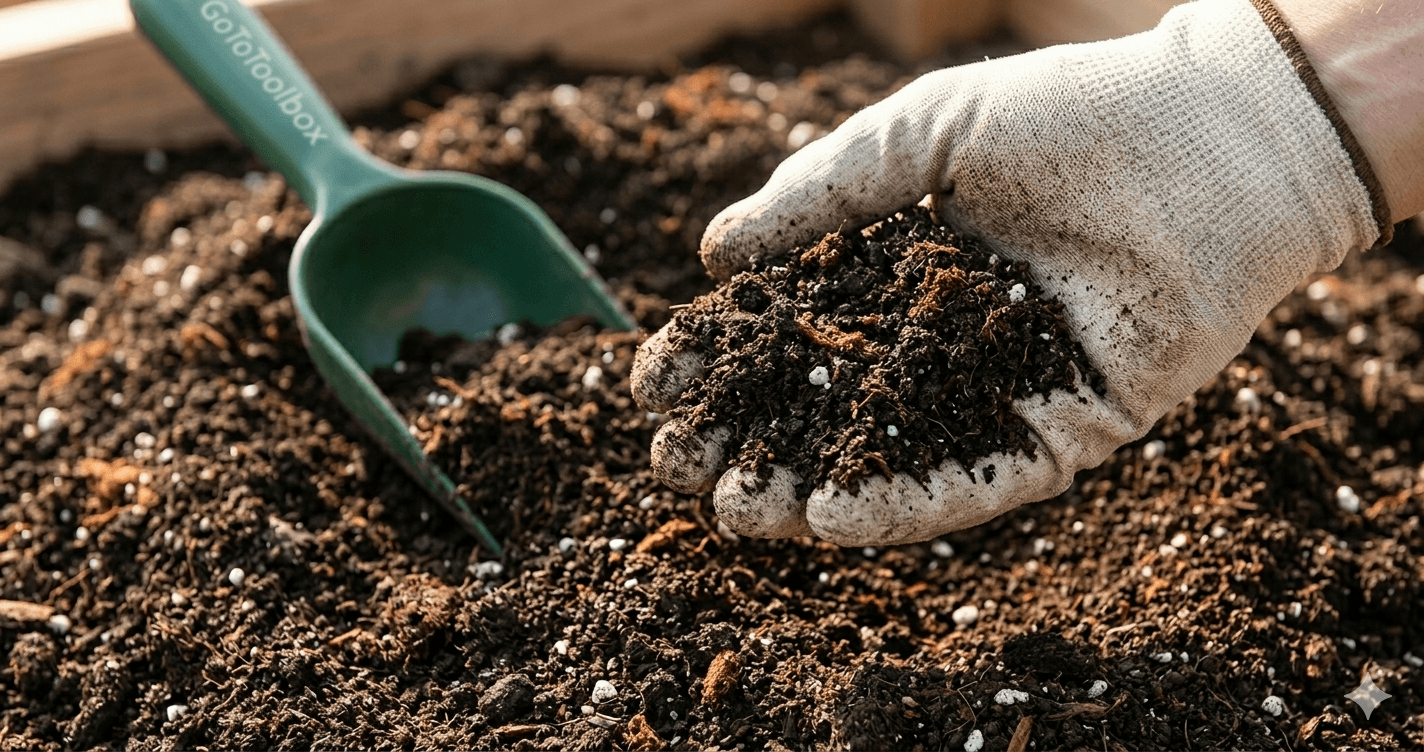
The Famous “Mel’s Mix” and Modern Variations
If you have researched gardening, you’ve likely heard of Square Foot Gardening. The original “Mel’s Mix” was the first famous soil mix for raised beds.
The Classic 1/3 Recipe
The original recipe calls for:
1/3 Coarse Vermiculite (for moisture retention)
1/3 Peat Moss or Coconut Coir (for structure)
1/3 Blended Compost (for nutrients)
While this is effective, modern 2026 gardening has moved toward more sustainable versions of the soil mix for raised beds, often replacing peat moss with renewable coco coir to reduce environmental impact.
The 60-30-10 Professional Blend
For most homeowners in the USA, buying individual components to mix a “Mel’s Mix” is too expensive. Most landscaping professionals recommend a more cost-effective soil mix for raised beds:
60% Screened Topsoil: This provides the mineral base and bulk.
30% Organic Compost: This is the life-blood of the garden.
10% Potting Mix: This adds the necessary aeration.
Before ordering, you should use a raised bed soil calculator to determine exactly how many cubic yards of this blend your project requires.
How Much Soil Do I Need? (The Calculation Phase)
You can have the greatest soil mix for raised beds in the world, but if you only fill your bed halfway, your plants will suffer.
Converting Inches to Volume
If you are building a bed that is 12 inches deep, you need to calculate the volume in cubic feet. This is where most gardeners get frustrated with the math. By using a specialized tool, you can ensure that your soil mix for raised beds covers the entire root zone of your plants without leaving gaps at the corners.
Accounting for Settlement
Organic matter decomposes. Your soil mix for raised beds will likely drop by 2 inches in the first year. We recommend “over-ordering” by 10% to ensure your garden looks full even after the first few waterings.
Soil Requirements for Specific Vegetables
Different crops have different “appetites.” Your soil mix for raised beds might need to be tweaked depending on what you are planting.
Tomatoes: These are “heavy feeders.” They require a soil mix for raised beds that is extra high in calcium and phosphorus to prevent blossom end rot.
Carrots: These need “loose” soil. If your soil mix for raised beds has too many rocks or heavy clay, your carrots will grow twisted and stunted.
Blueberries: These are the exception! They need an acidic soil mix for raised beds (pH 4.5–5.5). You cannot use standard garden soil for them.
Buying Guide: Bulk vs. Bagged
The financial side of creating a soil mix for raised beds can be shocking.
The “Bagged” Lifestyle
Buying bags of soil mix for raised beds from Home Depot or Lowe’s is convenient. You can buy 5 bags this weekend and 5 bags next weekend. However, the plastic waste is significant, and the cost per cubic foot is the highest.
The Bulk Delivery Advantage
If you have more than three large beds, you should always order a bulk soil mix for raised beds. Most local yards offer a “Garden Blend” or “3-Way Mix” that is pre-mixed and delivered by a dump truck.
Maintenance – Recharging Your Soil Each Year
You don’t need to replace your soil mix for raised beds every year. That would be a waste of money.
The “No-Dig” Method
In the spring, simply add 2 inches of fresh compost to the top of your existing soil mix for raised beds. Earthworms will do the work of pulling those nutrients down into the root zone for you.
Testing for pH
Every two years, test your soil mix for raised beds. Over time, rain and plant growth can change the acidity of the soil, making nutrients “locked” and unavailable to your plants.
Q: Can I use “Fill Dirt” in my soil mix for raised beds? A: Only as a bottom layer for very deep beds. Fill dirt has no nutrients and poor drainage.
Q: What is the best soil mix for raised beds in a hot climate? A: In hot areas, increase the percentage of coconut coir or peat moss to help the soil hold onto moisture longer during the heat of the day.
Q: Is organic soil worth the extra cost? A: Absolutely. An organic soil mix for raised beds ensures you aren’t introducing synthetic chemicals into the vegetables you plan to feed your family.
Conclusion: A Garden is Only as Good as its Foundation
Creating the perfect soil mix for raised beds is an investment in your future harvests. By balancing topsoil, compost, and aeration, you create a home where plants can flourish without stress.
Don’t forget to use our raised bed soil calculator before you head to the store. With the right math and the right mix, your 2026 garden will be your most productive one yet.