Mulch is a layer of material placed on top of soil to help retain moisture, reduce weeds, and improve plant health. It is widely used in gardening and landscaping to protect soil and enhance the overall appearance of outdoor spaces.
Choosing the right mulch can completely change how your garden looks and performs. With so many options available, many homeowners struggle to decide which one is best.
In this guide, we’ll break down the most popular types of mulch, their pros and cons, and when to use each one. You’ll also learn how to choose the best mulch for your specific needs and how much mulch you need for your project.
What Are the Different Types of Mulch?
Mulch falls into two main categories:
- Organic mulch (breaks down and improves soil)
- Inorganic mulch (long-lasting and decorative)
Each type serves a different purpose depending on your garden goals.
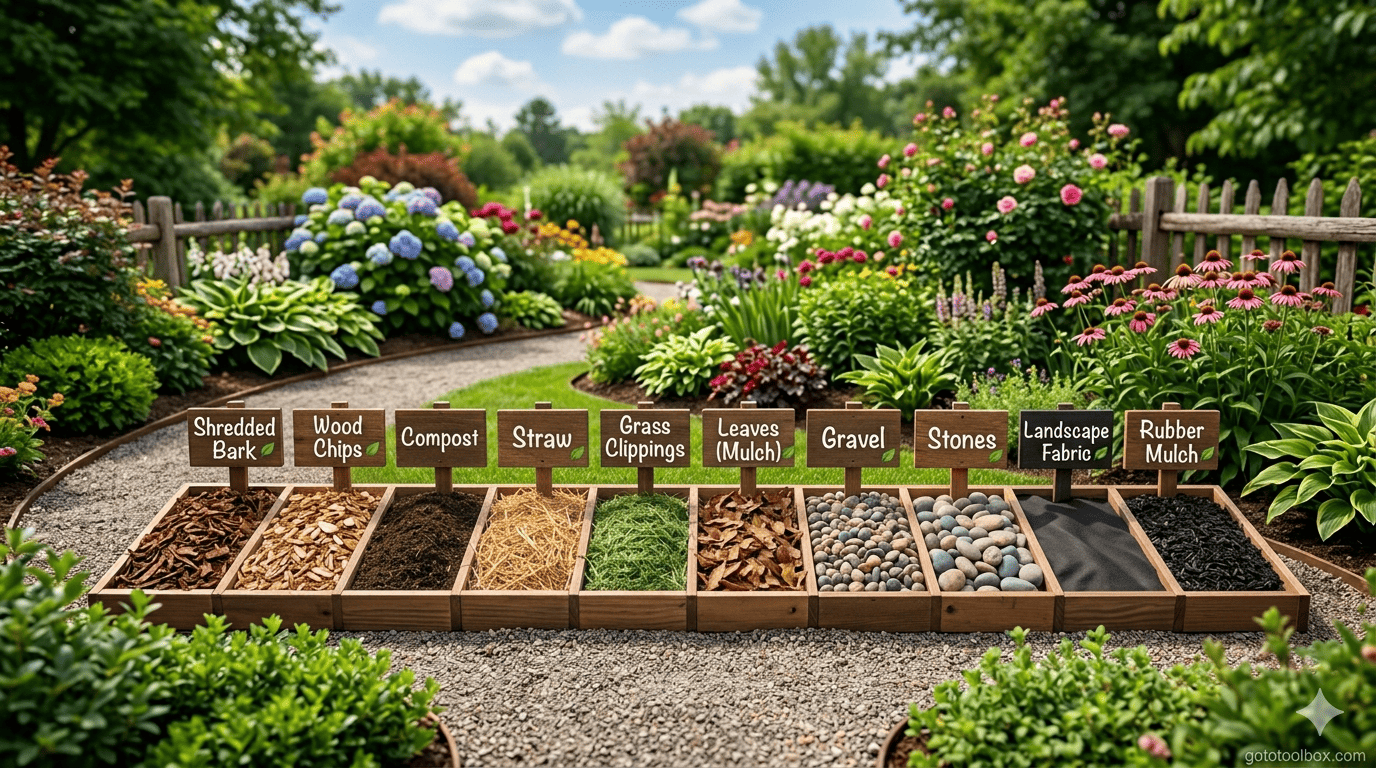
Organic Types of Mulch (Best for Soil Health)
🌿 1. Shredded Bark Mulch
- Popular for landscaping
- Retains moisture well
- Breaks down slowly
👉 Best for: flower beds and decorative areas
🌿 2. Wood Chips
- Long-lasting
- Great for pathways and trees
- Slower decomposition
👉 Best for: trees and large areas
🌿 3. Compost Mulch
- Rich in nutrients
- Improves soil fertility
- Breaks down quickly
👉 Best for: vegetable gardens
🌿 4. Straw Mulch
- Lightweight and affordable
- Protects soil from heat
- Helps retain moisture
👉 Best for: vegetable beds
🌿 5. Grass Clippings
- Free and eco-friendly
- Adds nitrogen to soil
👉 Best for: quick mulch for small areas
🌿 6. Leaves (Leaf Mulch)
- Easy to find
- Improves soil over time
👉 Best for: natural gardening
Inorganic Types of Mulch (Best for Low Maintenance)
🌿 7. Gravel Mulch
- Long-lasting
- Excellent drainage
- No decomposition
👉 Best for: pathways and landscaping
🌿 8. Stones or Pebbles
- Decorative
- Very durable
👉 Best for: modern garden designs
🌿 9. Landscape Fabric
- Blocks weeds effectively
- Often used under other mulch
🌿 10. Rubber Mulch
- Made from recycled materials
- Long-lasting
👉 Best for: playgrounds and decorative areas
Best Mulch for Different Uses
| Purpose | Best Mulch Type |
|---|---|
| Vegetable garden | Compost, straw |
| Flower beds | Bark, wood chips |
| Weed control | Wood chips, gravel |
| Decoration | Stones, bark |
| Trees & shrubs | Wood chips |
Organic vs Inorganic Mulch: Which Is Better?
- Organic mulch → improves soil but needs replacement
- Inorganic mulch → long-lasting but no soil benefits
👉 Best choice depends on your goal:
- Soil health → organic
- Low maintenance → inorganic
How Much Mulch Do You Need?
No matter which type of mulch you choose, the calculation method is the same.
👉 Use a mulch calculator to estimate:
- cubic yards
- cubic feet
- number of bags
This helps avoid overbuying or running short.
Common Mistakes When Choosing Mulch (And How to Avoid Them)
Choosing the right mulch is not just about appearance. Many gardeners make simple mistakes that can reduce the effectiveness of mulch or even harm plants. Here are the most common issues and how to fix them.
❌ Choosing mulch based only on looks
Many people pick mulch because it looks attractive, but not all types of mulch are suitable for every garden.
For example, decorative stones may look clean and modern, but they do not improve soil health. Organic mulch like bark or compost is a better choice if your goal is healthier plants.
👉 Always match mulch type with your garden’s purpose, not just appearance.
❌ Ignoring soil needs
Different plants require different soil conditions. Using the wrong types of mulch can affect moisture levels and nutrients.
Organic mulch improves soil over time, while inorganic mulch does not add any nutrients.
👉 If you are growing vegetables or flowers, choose mulch that supports soil health.
❌ Using too much mulch
Adding too much mulch is a very common mistake. Thick layers can block water and oxygen from reaching plant roots.
👉 The ideal mulch depth is 2–4 inches for most garden areas.
Anything more can lead to root problems and poor growth.
❌ Not considering maintenance
Some mulch types break down quickly and need regular replacement, while others last longer but require less care.
👉 Choose a mulch type based on how much maintenance you are willing to do.
Pro Tips for Better Mulch Results
Using mulch correctly can make a big difference in your garden’s health and appearance. Follow these expert tips to get the best results.
✅ Use organic mulch for long-term soil health
Organic mulch like compost, bark, or wood chips slowly breaks down and improves soil structure.
👉 This helps retain moisture and adds nutrients over time.
For more detailed guidance on soil improvement, you can refer to USDA Natural Resources Conservation Service (dofollow reference).
✅ Refresh mulch once per year
Most organic mulch decomposes over time. Reapplying a fresh layer once a year helps maintain proper depth and effectiveness.
👉 This also keeps your garden looking clean and well-maintained.
✅ Keep mulch at the right depth
Maintaining the correct mulch depth is essential for proper results.
👉 2–3 inches for moisture retention
👉 3–4 inches for weed control
If you’re unsure how much mulch you need, use your mulch calculator to estimate the exact volume.
✅ Avoid piling mulch near plant stems
Placing mulch too close to plant stems or tree trunks can trap moisture and cause rot.
👉 Leave a small gap around plants to allow airflow and prevent damage.
✅ Calculate before you buy mulch
One of the biggest mistakes is guessing the quantity.
👉 Always calculate your mulch needs first to avoid wasting money or running short during your project.
For detailed soil and mulch best practices, you can also refer to the official guide by the
USDA Natural Resources Conservation Service which explains how mulch improves soil health and moisture retention.
Frequently Asked Questions About Mulch
How do I know which mulch is best for my garden?
It depends on your goal. If you want to improve soil health, choose organic mulch like compost or bark. If you want long-lasting coverage with low maintenance, gravel or stones work better.
What type of mulch is best for preventing weeds?
Wood chips and bark mulch are great for weed control when applied at 3–4 inches. They block sunlight and reduce weed growth effectively.
How much mulch do I need for my garden area?
The amount depends on your area size and depth. Most gardens need 2–4 inches of mulch. You can use a mulch calculator to quickly estimate cubic yards or bags required.
Can I use fresh mulch every year or reuse old mulch?
You can reuse old mulch if it’s still in good condition. However, it’s best to refresh the top layer each year to maintain proper depth and appearance.
Is it okay to put mulch directly on soil?
Yes, mulch should be applied directly on soil. For best results, remove weeds first and water the soil before spreading mulch evenly.
What happens if I use too much mulch?
Too much mulch can block air and water from reaching plant roots, leading to root rot and poor plant growth. Always keep mulch depth within 2–4 inches.
Which mulch is best for vegetable gardens?
Compost and straw are the best options because they improve soil quality and are safe for growing food.
How often should mulch be replaced?
Most organic mulch should be refreshed once a year. Some types like wood chips may last longer but still need topping up.
Is mulch better than soil for plants?
Mulch is not a replacement for soil. It is used on top of soil to protect it, retain moisture, and improve plant health over time.
Can I mix different types of mulch in one area?
It’s possible, but not recommended for most gardens. Using one consistent type gives better results in terms of appearance and performance.
Conclusion
Understanding the different types of mulch is essential for making the right choice for your garden. Each mulch type offers unique benefits, whether you want to improve soil health, reduce weeds, or enhance the overall appearance of your outdoor space.
By comparing the various types of mulch, you can select the option that best fits your needs, whether it’s organic mulch for better soil or inorganic mulch for long-lasting coverage. Choosing the right mulch not only improves plant growth but also makes garden maintenance easier.
Before starting your project, always consider your garden goals and calculate how much mulch you need. Using a mulch calculator ensures you apply the correct amount based on your selected types of mulch and recommended depth.
With the right knowledge and proper planning, selecting from different types of mulch becomes simple, helping you achieve a healthier and more attractive garden.