Introduction: Why Circle Math is the Hardest Part of Landscaping
If you are a homeowner in the USA, you know that spring means one thing: mulching. While measuring a rectangular garden bed is simple “length times width,” circular areas—like those beautiful tree rings or curved flower borders—require a bit more geometry.
Using a circular mulch calculator is the only way to avoid the “extra trip to Home Depot” or, worse, having a giant pile of leftover mulch sitting on your driveway for a month. In this guide, we will break down exactly how much mulch for a circle you need, the best types of mulch for American climates, and how to use our free tool to get a professional result every time.
How to Measure a Circular Garden Bed for Your Calculator
Before you can use a circular mulch calculator, you need accurate measurements. In the United States, we use the Imperial system (feet and inches), which is exactly how our tool is calibrated.
1. Finding the Diameter
Don’t guess the radius. Instead, take a long tape measure and run it across the widest part of your circle, passing directly through the center. This is your Diameter.
Pro Tip: If your circle is slightly “oval” (not perfectly round), measure the widest part and the narrowest part, add them together, and divide by two to get an average diameter.
2. Determining the Ideal Depth
How deep should your mulch be? This depends on your goal:
Weed Suppression: 3 inches (The USA standard).
Moisture Retention: 2 inches.
New Tree Protection: 2–3 inches.
Playground Safety: 9–12 inches (Requires specialized “Playground Grade” mulch).
3. Converting to Feet
Our tool at GoToToolbox allows you to enter inches for depth for the most accurate calculate mulch for round beds experience.
The “Tree Ring” Specialist: Why Every Tree Needs a Calculator
One of the most common mistakes in American landscaping is ‘volcano mulching,’ where mulch is piled high against the tree trunk. According to the USDA and Mississippi State University Extension, you should pull mulch 2–3 inches away from the trunk to prevent bark rot and insect infestation. Using a proper circular mulch calculator ensures you get the right depth without harming your trees.”
The Danger of “Volcano Mulching”
In many suburban neighborhoods in the USA, you will see “mulch volcanoes“—piles of mulch stacked 6 inches high against the trunk of a tree. This is a mistake. It traps moisture against the bark, leading to rot and insect infestation.
The Proper Way: Use our estimator to find the volume for a flat “donut” shape. Leave a 2-inch gap between the mulch and the tree bark.
Benefits of Round Tree Beds
A circular bed isn’t just for looks. It prevents lawnmowers from bumping into the trunk (mechanical damage) and reduces competition from grass for water and nutrients. By using a circular mulch calculator, you ensure the roots are covered without suffocating the tree.
Bulk Mulch vs. Bagged Mulch: Which is Cheaper in 2026?
Once you have your results from the Circular Mulch Calculator tool, you have to decide: buy it by the bag or have a truck dump it on your lawn?
When to Buy Bags
If your circular bed is small (under 10 feet in diameter), bags are usually the way to go.
Standard USA Bag Sizes: 2 cubic feet (most common at Lowe’s/Home Depot) or 3 cubic feet (common for pine nuggets).
Our Tool’s Advantage: Unlike other calculators, GoToToolbox tells you the exact bag count for both 2 cu. ft. and 3 cu. ft. sizes.
When to Order Bulk
If your total “Cubic Yard” result is higher than 3.0, ordering bulk is significantly cheaper.
The Cost Difference: Bulk mulch usually costs $30–$45 per yard, plus delivery. Bagged mulch can cost $5–$7 per bag.
The Math: 13.5 bags (2 cu ft) = 1 Cubic Yard. If you need 4 yards, that’s 54 bags. Save your back and order bulk!
Popular Mulch Types in the USA Market
To truly optimize your landscaping, you need the right material. Here are the top searched mulch types for 2026:
| Mulch Type | Best Use Case | Longevity |
| Hardwood Mulch | Standard flower beds | 12 months |
| Cedar Mulch | Pest-resistant (great for tree rings) | 18–24 months |
| Pine Nuggets | Acid-loving plants (Azaleas/Hydrangeas) | 2–3 years |
| Black/Red Dyed | High-contrast modern landscaping | 12 months (fades fast) |
| Rubber Mulch | Playgrounds and non-planting areas | 10+ years |
Step-by-Step Guide: Using the GoToToolbox Circular Mulch Calculator
We designed our tool to be the most user-friendly circular mulch calculator on the web. Here is how to use it for maximum accuracy:
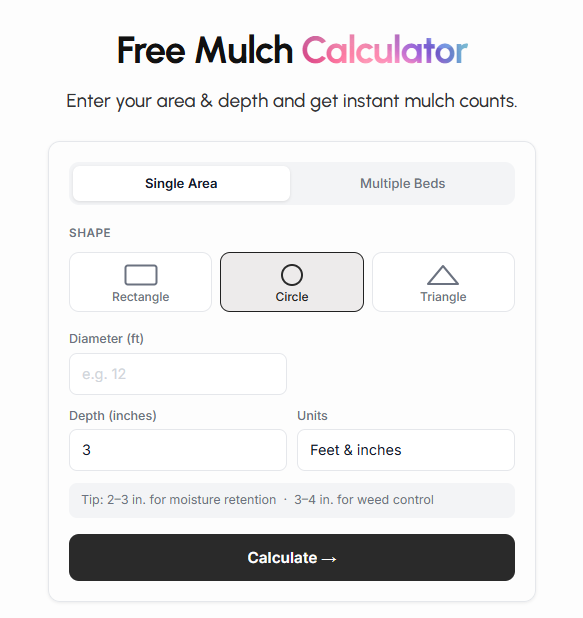
Select Your Shape: Click the “Circle” icon.
Input Diameter: Enter the width of your bed in feet.
Input Depth: Most users choose 3 inches.
Check the Results: Our tool provides the total square footage, the cubic yards, and the cubic feet.
Review the Bag Table: Look at the “Bags Needed” section. We recommend following the +10% Buffer column. Mulch is organic; it settles and compresses after the first rain. Having that 10% extra ensures your circle looks full and professional.
Frequently Asked Questions (FAQ Schema)
Q: How do I calculate mulch for a circle?
A: To calculate mulch for a circle, multiply $\pi$ (3.14) by the radius squared ($r^2$), then multiply by the depth. Or, simply use our circular mulch calculator by entering the diameter to save time and avoid math errors.
Q: How many bags of mulch for a 10-foot tree ring?
A: For a 10-foot diameter tree ring at 3 inches deep, you will need approximately 20 bags (2 cu. ft. each).
Q: Is 3 inches of mulch too much?
A: No. In most USA climates, 3 inches is the perfect depth for blocking weeds while still allowing water to reach the roots. For circular beds with very small plants, you might drop to 2 inches.
Q: How do I measure a circle if there is a fountain in the middle?
A: This is what we call “negative space.” Measure the diameter of the whole area first. Then, measure the diameter of the fountain base. Subtract the fountain’s area from the total area. Our circular mulch calculator makes this easy by allowing you to calculate each part separately in the ‘Multiple Beds’ tab.
Q: Is cedar mulch safe for pets in the USA?
A: Yes, natural cedar is generally safe. However, avoid “dyed” mulches (Red or Black) if you have pets that like to dig, as the dyes can sometimes irritate their paws. Using a calculate mulch for round beds strategy with natural chips is the safest bet for dog owners.
Q: How much does 1 cubic yard of mulch weigh?
A: On average, a cubic yard of dry mulch weighs about 600–800 lbs. If it’s wet, it can exceed 1,000 lbs! This is why knowing your exact count via a circular mulch calculator is important—you don’t want to overload your pickup truck.
Conclusion: Stop Guessing and Start Calculating
Landscaping is expensive enough without wasting money on extra materials. By using a dedicated circular mulch calculator, you take the guesswork out of your weekend projects. Whether you’re a DIY homeowner or a professional landscaper, having the exact bag count for your tree rings and round garden beds saves time, money, and effort.
Ready to start? Calculate your mulch here!